
MATERIALS GUIDE
Manganese Steel vs High-Chrome Iron: Which Wear Parts Last Longer?
Last updated August 2026 · By SKS Steel Zambia, Foundry & Machine Shop, Kalulushi
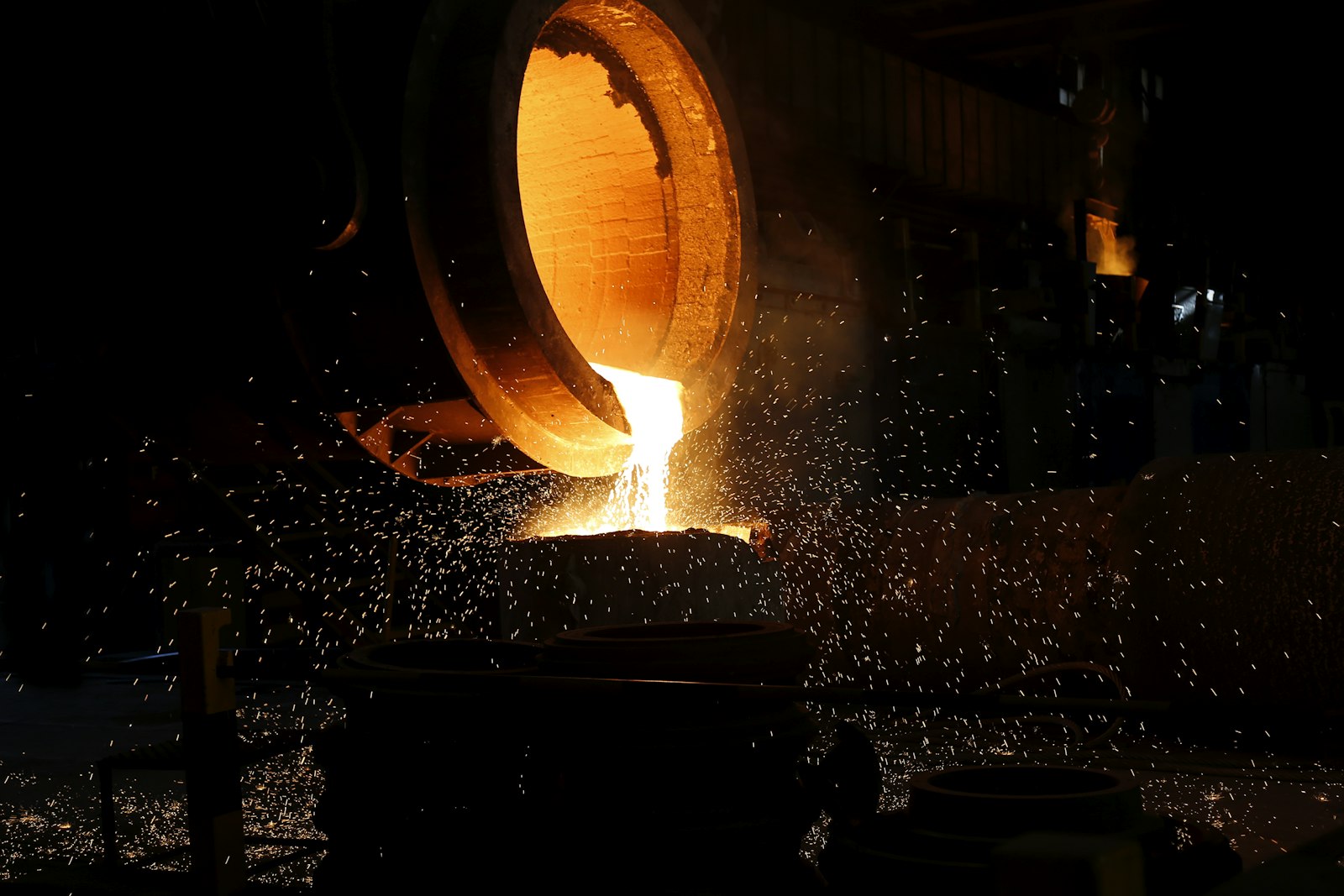
Neither material wins outright. Manganese steel (Mn13/Mn18, work-hardening manganese steel) toughens under impact and resists cracking, which is why it dominates jaw plates and blow bars. High-chrome iron holds a harder wear face and outlasts manganese steel under pure sliding abrasion, which is why it is common in mill and cone liners crushing hard, non-impact-heavy ore.
What Is Manganese Steel (Mn13/Mn18)?
Manganese steel, often called Hadfield steel, is an austenitic alloy that starts relatively soft (around 200 HB) but work-hardens to 500+ HB at the surface as impact deforms it. That work-hardening layer is what gives manganese parts their long service life under heavy impact: the harder the hits, the tougher the surface gets, while the core stays ductile and resists cracking. Mn13 (13% manganese steel) is the standard grade; Mn18 (18% manganese steel) work-hardens further and suits even heavier impact duty. This is why we cast jaw crusher plates and blow bars almost exclusively in manganese steel, they take direct, repeated impact from crushed rock.
What Is High-Chrome Iron?
High-chromium white iron gets its wear resistance from hard chromium-carbide particles locked into the metal’s structure, typically 25–30% chromium, reaching 600–700 HB as-cast, with no need to work-harden. That makes it excellent against sliding and grinding abrasion, but it is brittle: a hard impact can crack or chip it rather than dent it. High-chrome iron suits mill liners, some cone and bowl liner positions, and grinding media, where ore slides and grinds rather than slams.
Manganese Steel vs High-Chrome Iron at a Glance
| Property | Manganese Steel (Mn13/Mn18) | High-Chrome Iron |
|---|---|---|
| Hardness as cast | ~200 HB (work-hardens to 500+ HB in service) | 600–700 HB as cast |
| Best against | Impact | Sliding abrasion |
| Toughness | High, resists cracking | Lower, brittle under impact |
| Typical parts | Jaw plates, blow bars, impact hammers | Mill liners, some cone/bowl liners, grinding media |
| Needs impact to perform | Yes, hardens with use | No, hard from the start |
How to Choose the Right Material for Your Part
If the part takes direct blows, jaw crusher plates, blow bars, impact hammers, manganese steel is almost always the right call. If the part sees mostly sliding or grinding wear with lower impact, some mill liner and cone liner positions, high-chrome iron often lasts longer for the same wall thickness. Mixed-duty parts, with moderate impact and abrasion, are where the choice gets genuinely close, and it is worth sending us your feed material and equipment details so we can recommend a grade rather than guess.
Frequently Asked Questions
Not Sure Which Grade Fits Your Equipment?
WhatsApp us your feed material and part details and we will recommend a grade.
SKS STEEL ZAMBIA LIMITED
Off Kalengwa Road, Chief Nkana
Kalulushi, Copperbelt Province, Zambia
+260 976 037 408
+260 950 863 175
skssteelz@gmail.com
vbsingh1993@gmail.com
Steel foundry & castings since 2019.